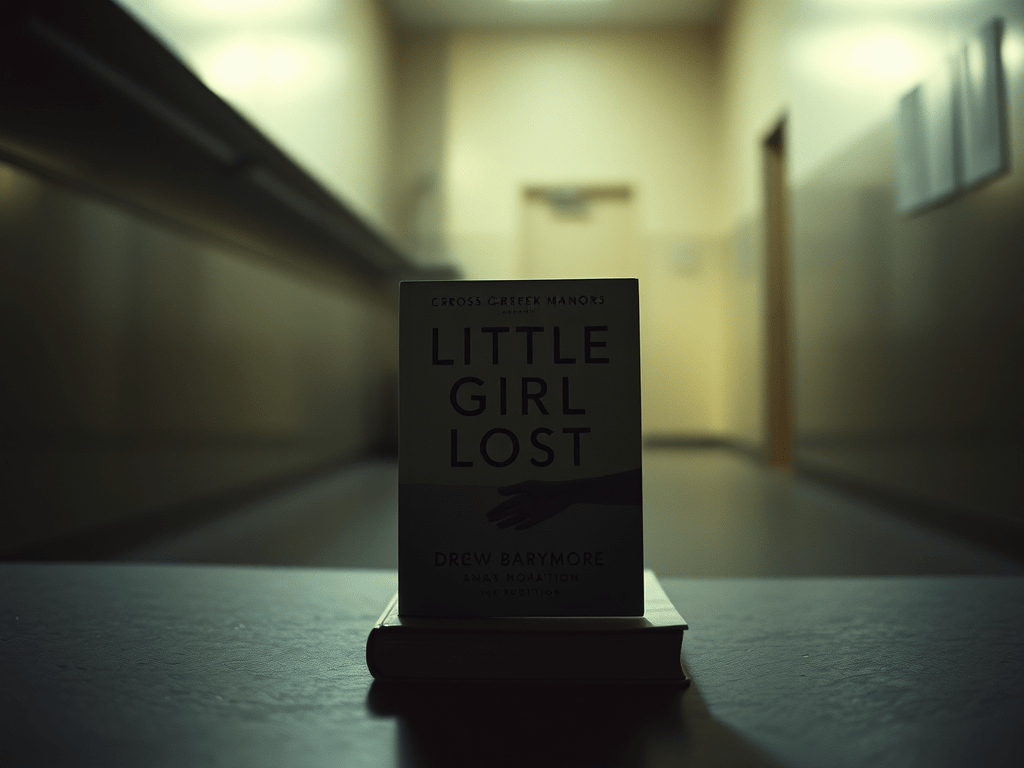
When I was trapped inside the walls of Cross Creek Manor, a so-called “therapeutic” program for “troubled teens,” my world had shrunk to a series of rigid rules, forced confessions, and a constant battle to prove I was worthy of basic human dignity. There was no escape—not physically, and certainly not mentally. Every day felt like a slow erosion of who I was, until I no longer recognized the girl staring back at me in the mirror.
And then, in the most unexpected place, I found a lifeline.
Tucked away in the small collection of approved books at Cross Creek, I found a copy of Little Girl Lost by Drew Barrymore. I don’t know what made me pick it up. Maybe it was the cover, maybe it was the desperation to find something—anything—that would remind me I wasn’t alone. What I do know is that opening that book changed something in me.
Finding Myself in Drew’s Story
At first, I couldn’t believe it was even allowed inside those walls. Here was Drew Barrymore, a girl who had been through hell—addiction, rehab, estrangement, being institutionalized—and had come out on the other side. Her story wasn’t sugar-coated. It wasn’t a neatly wrapped redemption arc with a happy ending stamped on the last page. It was raw, messy, and brutally honest.
And yet, the part that hit me the hardest wasn’t just her struggle—it was the fact that she got out. She survived.
At Cross Creek, survival wasn’t guaranteed—not in the way most people think. Sure, we weren’t in immediate physical danger (at least, not most of the time), but the slow psychological breaking-down process was just as damaging. We were told that we were broken. That our parents sent us away because we had done this to ourselves. That the only way we could earn our way back to the outside world was through total submission.
When I read Little Girl Lost, it was the first time I saw through the lie.
Drew hadn’t been “bad.” She was struggling with some adult problems and she expressed feeling like she did need help. She was also a child—just like me. Had been placed in a system that prioritized punishment over healing? It seems the treatment she experienced did in fact help her. And just like me, she had been told that she needed to be fixed not healed.
But she wasn’t broken. And neither was I.
The Book Report That Meant More Than a Grade
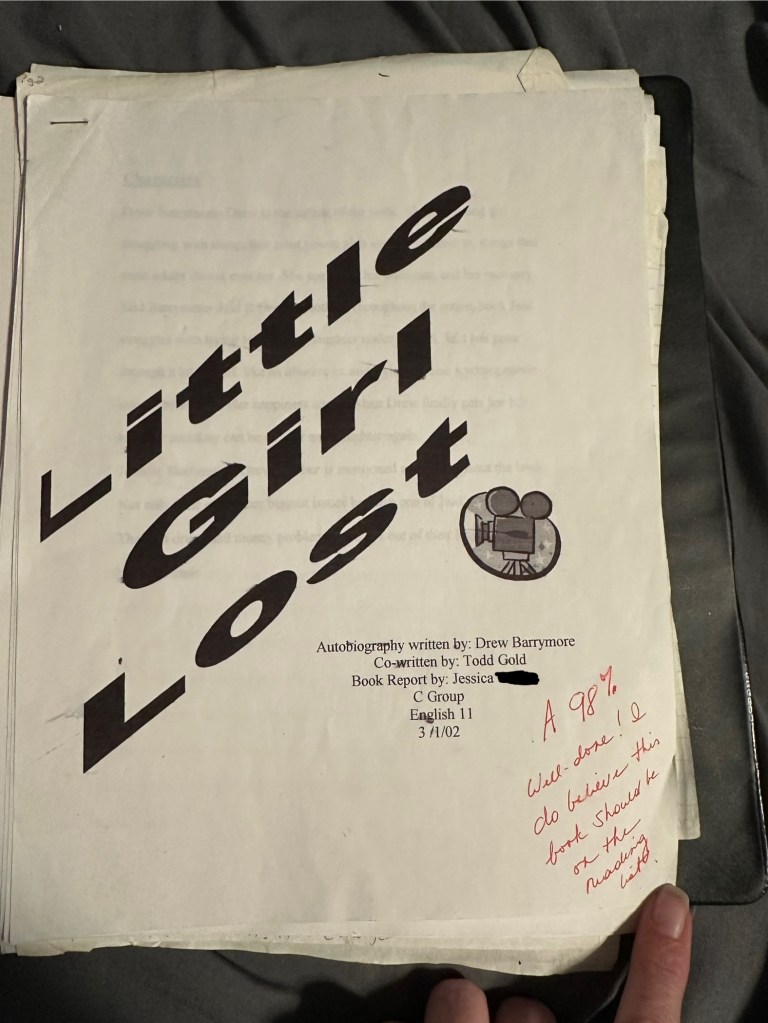
I don’t remember exactly why I chose Little Girl Lost for a book report, but I do remember what it felt like to write it. For the first time in a long time, I felt connected to something outside of Cross Creek. I wasn’t just regurgitating information for the sake of following the rules—I was feeling something again. I was thinking critically. I was questioning the system I was trapped in.
At the time, I didn’t know if the staff would allow my report to pass. After all, questioning anything about our circumstances was a fast track to punishment. But somehow, it got through.
Looking back, I think part of me wanted someone—anyone—to read it and realize the parallel between Drew’s story and my own. I wanted someone to see me, to recognize that I wasn’t just a “troubled” kid who needed to be reprogrammed. I was a girl who had been sent away for reasons I didn’t fully understand, just trying to survive the best I could.
I still have that copy of Little Girl Lost. I found it recently, buried inside my old seminar binder from Cross Creek. The pages are worn, the cover creased from years of being handled, moved, and hidden away. But holding it in my hands again reminded me of the moment I realized I wasn’t alone. That my story mattered. That I wasn’t just a lost cause.
Books as a Lifeline for Institutionalized Kids
This experience solidified something in me: books are dangerous to broken systems. They spark critical thinking. They plant seeds of hope. They remind kids who are told they’re nothing that they are something. And that’s why so many of these programs try to control what you can read.
To this day, I wonder how Little Girl Lost slipped through the cracks. Maybe some staff member assumed it was just another “celebrity memoir,” not realizing that Drew’s story would resonate with so many of us locked away from the outside world. Maybe they thought it was a cautionary tale, meant to scare us into compliance.
But for me? It was proof that survival was possible.
It’s no coincidence that so many survivors of the troubled teen industry have clung to books—A Child Called It, The Glass Castle, Educated—stories of survival, resilience, and reclaiming autonomy. Because when the world tells you that you have no voice, no agency, no way out, the written word becomes a rebellion.
Why This Story Still Matters
Drew Barrymore went on to reclaim her life, her career, and her happiness. She broke free from the systems that tried to control her and built something new. And me? I’m still working on it. But I wrote my own book. I told my story. And if there’s one thing I hope it does, it’s to reach the kid who is still trapped—whether physically, mentally, or emotionally—and remind them:
You are not lost.
You are not broken.
And one day, you will get out.
And maybe you’ll write your own story too.
Join the Conversation
Have you ever found a book that changed your perspective, that made you feel seen in a way nothing else had? I’d love to hear about it. Drop a comment below or share this with someone who needs to hear it.
 Jessica Woodville | Memoir & Musings
Leave a comment