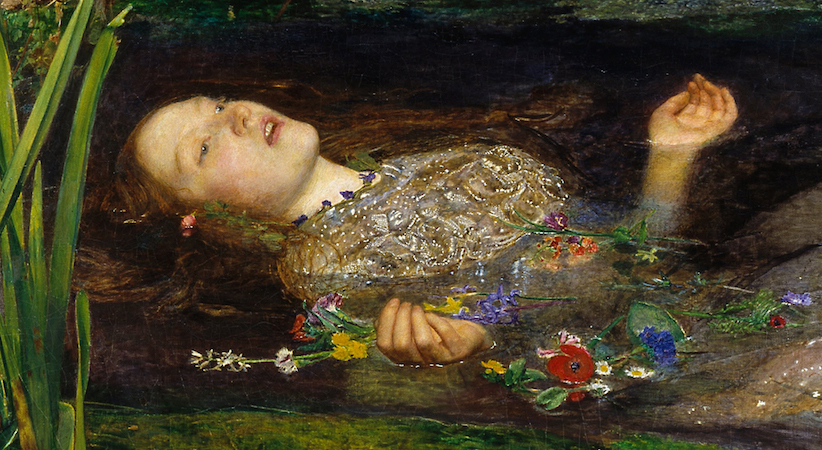
There’s a famous painting by John Everett Millais called Ophelia. You’ve probably seen it (you have now, it’s the cover to this blog)—the pale woman floating in the water, delicate flowers around her, her hands raised in surrender, her face eerily peaceful. It’s haunting, tragic, and honestly? A perfect visual representation of what it feels like to write a memoir.
Writing a memoir isn’t just about putting words on paper—it’s about breaking yourself open, diving into the depths of your past, and resurfacing with something coherent enough that people can read it without needing therapy themselves (though, fair warning, I make no promises). It’s about revisiting every painful, beautiful, and utterly raw moment and choosing to relive it—all while hoping it doesn’t pull you under.
When I started this book, I knew it would be hard. But I didn’t realize just how much I’d have to fight through—physically, emotionally, and mentally. My own mind turned against me with imposter syndrome, whispering, Who do you think you are? No one cares about your story. My body fought back with nausea, panic attacks, and the relentless weight of my adrenal disorder. There were days when my symptoms flared so badly that just sitting at my laptop felt like running a marathon on broken glass. I’d stare at the screen, hands frozen above the keyboard, wondering if the pain, the exhaustion, the almost constant state of physical and mental upheaval, was worth it.
And then, in the middle of one of my worst flare-ups, it hit me: part of what keeps me unwell is the environment I am living in. The cycles I am stuck in. Until I stand up and do something—anything—I will remain in a place where I cannot fully heal. I will remain trapped in my illness, waging war between my mind, body, and soul. Writing this book wasn’t just about telling my story—it was about reclaiming my power, piece by piece, word by word.
Here’s the thing: I have joy in my life. I’m a mom, and that alone brings me immense happiness. But I refuse to make my children the sole foundation of my identity, because what happens when they grow up and leave? Too many people—mothers especially—lose themselves entirely in their role, only to be left staring at the walls when their children move on. I refuse to let that be my story. I want my daughters to see me thriving, chasing my dreams, stepping into my power—not drowning in an existence I never truly lived.
So as agonizing as it was to relive the darkest moments of my life, I pushed forward. Not just for the readers who might find solace in my words. Not just for the survivors who need to know they’re not alone. But for me. For my daughters. For the future I am fighting for.
And truth be told, I had the support of a handful of close friends and my psychiatrist, reminding me that writing something this raw requires a safety net. That if I was going to pull my own trauma to the surface, I needed to have solid ground to stand on. If you’re thinking about writing your own story, I urge you: get support. Whether it’s therapy, trusted friends, or a community of writers who understand the weight of what you’re doing—don’t do it alone. No one should have to navigate this kind of emotional deep dive without a life raft.
So yes, writing this memoir was the hardest thing I’ve ever done. It was a fight against myself in every possible way. But it was also an act of survival. And, more importantly, it was an act of transformation. Because by sharing my story, I am not just hoping to help others—I am saving myself. And in doing so, I am shaping a future where my daughters see firsthand what it means to fight for healing, for freedom, for a life worth living.
Much like Ophelia, I found myself floating in the wreckage of my past. But unlike her, I refused to let the water take me under. And that? That is the truth about writing a memoir.
 Jessica Woodville | Memoir & Musings
Leave a comment